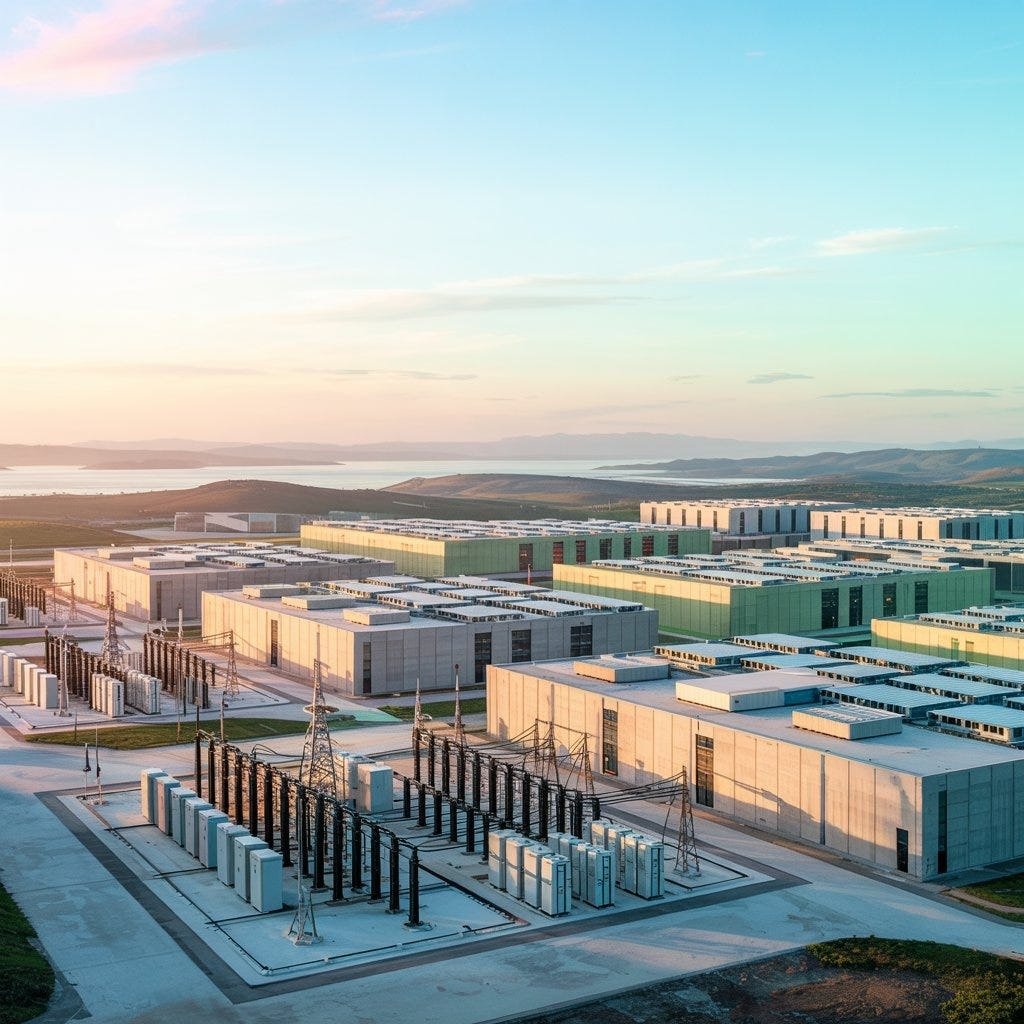
The rapid integration of artificial intelligence (AI) and cloud computing has triggered a massive surge in data center energy demand, with regional spillover demand accelerating greenfield builds across Indonesia. Because the national grid remains heavily reliant on fossil fuels, powering these continuous, energy-intensive facilities creates a severe carbon emissions problem. To decouple this rapid digital infrastructure growth from greenhouse gas emissions, this article explores the emerging solution of pairing dedicated power plants with Carbon Capture and Storage (CCS) technology.
Indonesia’s Data Center Bloom
Indonesia possesses tremendous momentum to establish itself as a primary digital hub in Southeast Asia. However, this momentum could become a liability if the underlying energy requirements are not strategically addressed. Driven by the rising demand for AI and enterprise cloud migration, the national data center IT load is projected to grow from 1.44 GW in 2025 to 3.56 GW by 2030, representing a Compound Annual Growth Rate (CAGR) of 19.89%. Similarly, the data center market value is expected to expand from USD 1.83 billion in 2026 to USD 3.4 billion in 2031.
This hyper-growth is further accelerated by overflow demand from Singapore, positioning areas like Batam as prime landing zones due to Special Economic Zone (SEZ) advantages. These SEZ incentives can reduce data center CAPEX by up to 11%. Furthermore, streamlined Online Single Submission (OSS) processes have successfully shaved average permitting times from 24 weeks down to just 10 weeks. Consequently, key industry players such as AWS, Google, and Microsoft have already announced 0.25 GW worth of projects concentrated in Jakarta and Batam. Fortunately, these high-growth digital hubs are situated near abundant depleted oil and gas reservoirs in the Java Sea and Sumatra, making them ideal geographic candidates for integrated CCS networks.
The Carbon and Reliability Challenge
As developers accelerate these greenfield builds, they face a dual challenge of managing carbon emissions and ensuring grid reliability. Modern data center racks require significant power—ranging from 15 kW to 30 kW per rack—and demand a continuous, 24/7 energy supply to maintain precise cooling temperatures and uninterrupted operations. Fulfilling this continuous baseload using only intermittent renewable energy is currently difficult in Indonesia, where the renewable energy mix remains below 16% and the national grid relies on coal for roughly 68% of its generation.
The global tech companies expanding into the region are highly sustainability-minded and bound by strict Environmental, Social, and Governance (ESG) net-zero targets. For Indonesia to fully leverage its current momentum and capture this massive investment wave, it must provide a pathway to become a clean digital hub.
Decarbonizing Dedicated Power: The Role of CCS in Data Centers
To bridge the gap between high baseload energy needs and strict ESG mandates, Carbon Capture and Storage (CCS) serves as a vital decarbonization catalyst. By integrating CCS technology directly into dedicated power generation facilities—both Natural Gas Combined Cycle (NGCC), Coal-Fired Power Plants (CFPP), or retrofitted existing thermal facilities—operators can capture between 90% and over 95% of the total CO2 emissions produced before they enter the atmosphere.
This allows thermal plants equipped with CCS to act as a highly reliable bridge technology, supplying continuous off-grid power while the broader renewable energy and battery storage sectors mature. This dedicated low-carbon power model is already transitioning from concept to reality globally. In the United States, tech giants have begun implementing this exact strategy, such as Google’s recent carbon capture power agreement with the Broadwing facility in Illinois, setting a precedent for powering AI workloads with natural gas abated by CCS. Fortunately, Indonesia’s high-growth digital hubs are situated near several early-stage CCS projects across Java and Sumatra, making them ideal geographic candidates for an integrated CCS ecosystem.
Strategic Implications and Call to Action
The deployment of CCS for the digital infrastructure sector offers cascading economic and environmental benefits for Indonesia. The initial CCS infrastructure and storage hubs built to decarbonize data center power generation can eventually be utilized by other heavy industries, provided there are supporting regulations to facilitate shared carbon networks.
Indonesia does not need to wait for a completely renewable grid to successfully compete in the global digital market; however, it must actively neutralize emissions as it builds its infrastructure. By adopting robust CCS technology, developers can secure the reliable energy required by global tech firms while adhering to critical national climate targets. We invite industry stakeholders, developers, and policymakers to collaborate with the Indonesia CCS Center to build the frameworks necessary to make low-carbon digital infrastructure a reality. Reach out to our team today to explore how CCS can future-proof your next data center investment.
This Article is written by:
Naufal Herviadi is a consultant analyst at the Indonesia CCS Center (ICCSC) and a Mechanical Engineering graduate from the University of Indonesia. Passionate about sustainability and research, he contributes in sustainability-driven studies, strategic analysis, and collaborative efforts to accelerate CCS progress in Indonesia.