What is Carbon Capture Storage?
As part of a broader climate strategy, Carbon Capture and Storage (CCS) offers an innovative approach to capturing emissions at their source and mitigating their impact on the environment. It works by capturing carbon dioxide (CO₂) emissions from major sources such as power plants, industrial facilities, or even directly from the atmosphere, then storing the CO₂ deep underground to keep it out of the atmosphere.
In a world where CO₂ emissions are a major driver of global warming, CCS is seen as a crucial part of the toolkit for countries aiming to reach net-zero emissions, including Indonesia. According to the International Energy Agency (IEA), CCS could contribute to 14% of the cumulative emissions reductions needed by 2050 under the Sustainable Development Scenario.
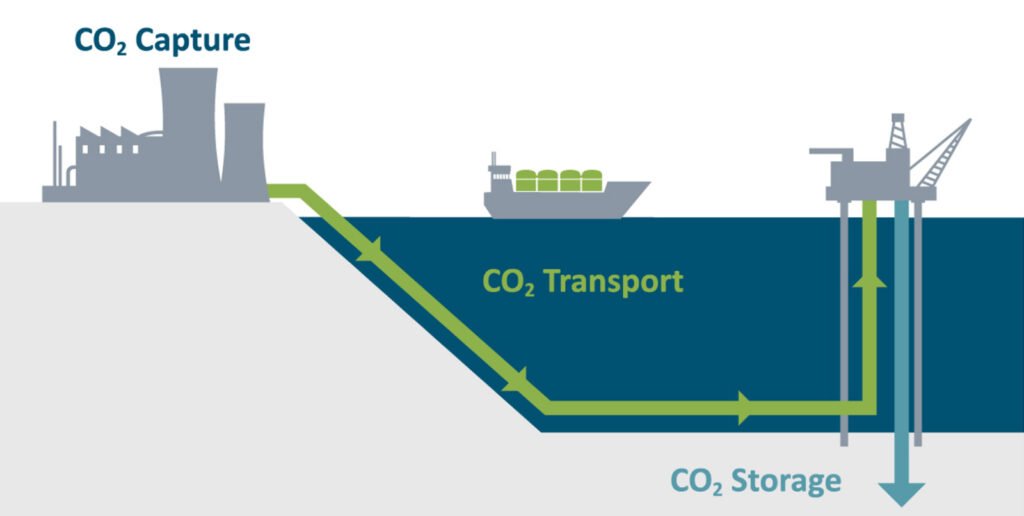
Carbon Capture
Carbon capture is the process of removing CO₂ from industrial emissions or power generation before it is released into the atmosphere. This can be done using various technologies, such as post-combustion, pre-combustion, or oxy-fuel capture, which separate CO₂ from other gases. Capturing CO₂ at the source is the first critical step in reducing greenhouse gas emissions.
Carbon Transport
After capture, CO₂ must be safely transported to a storage site. It is often compressed into a dense, supercritical fluid to move efficiently. Pipelines are the most common method for long-distance transport, while ships are used for inter-island or international transfer. Effective transport ensures a reliable connection between capture and storage sites.
Carbon Storage
Captured CO₂ is then securely stored in underground geological formations, such as depleted oil and gas reservoirs or deep saline aquifers. These formations are carefully selected for their ability to safely contain CO₂ for the long term. Proper monitoring and management ensure that the gas remains securely stored, preventing it from re-entering the atmosphere and contributing to climate change.
Why we need CCS?
With growing energy demand, and our current dependence on fossil fuel-based power, Indonesia’s per capita CO2 emissions have been climbing up the ranks as one of the highest in the world. Our current level of emissions put us as one of the most vulnerable countries to climate risk, with high exposure to floodings and extreme temperatures.
The IPCC has set the 1.5°C limit as a critical threshold to prevent more severe climate impacts and protect communities and ecosystems. In line with this global effort, Indonesia has committed to reaching Net Zero Emissions by 2060, guiding a gradual shift toward cleaner and more sustainable energy and industry.
Carbon Capture and Storage is one of the key solutions that can help Indonesia reduce emissions from sectors that are difficult to decarbonize while still maintaining energy security. With large CO₂ storage potential, including an estimated 572 gigatonnes in saline aquifers and 4.85 gigatonnes in depleted oil and gas fields, Indonesia is well positioned to integrate CCS as a long-term pillar of its net zero pathway.